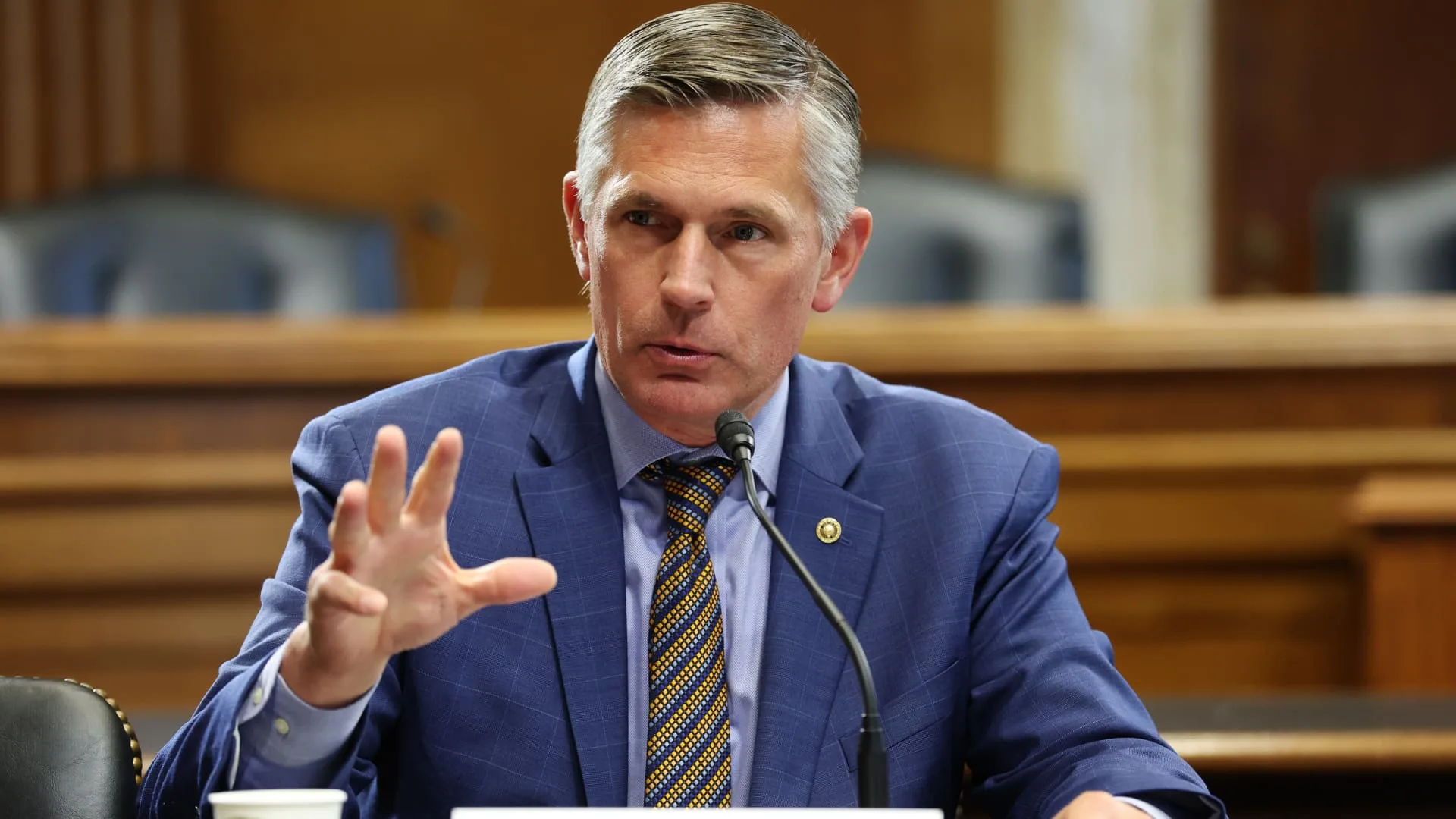
The U.S. Senate failed to fast-track a bipartisan bill designed to curb utility cost increases linked to artificial intelligence data centers. The Republican-backed effort stalled after Martin Heinrich, the top Democrat on the Senate Committee on Energy and Natural Resources, objected to the proposal.
The measure, known as the Ratepayer Protection Act, is the first bill of its kind to be taken up by Congress. It comes as data center expansion accelerates across the United States and opposition grows in several states over the cost of new power infrastructure and the risk that those expenses will be passed on to households.
Ohio Republican Sen. Jon Husted, who introduced the bill in July, tried to move it through the Senate by unanimous consent, avoiding a roll-call vote. But New Mexico Democrat Sen. Martin Heinrich blocked the request, arguing that the proposal did not go far enough in forcing companies to bear the costs they create.
Heinrich said it was not enough to simply encourage states to consider making data centers pay for grid upgrades. In his view, Congress should pass binding rules with stronger enforcement rather than rely on voluntary commitments from states and developers.
The House approved the bill on Wednesday night by a 417-3 vote. The only lawmakers to oppose it were three progressive Democrats: Summer Lee of Pennsylvania, Delia Ramirez of Illinois and Rashida Tlaib of Michigan.
The legislation would have created a regulatory framework that states could choose to adopt. Under that approach, AI data centers with electricity demand of 100 megawatts or more would be expected to cover the cost of new power generation, transmission lines and related infrastructure instead of shifting those expenses to consumers.
Speaking on the Senate floor, Husted said the U.S. is expected to build the equivalent of 1,000 major data centers over the next five years, while more than 2,000 projects are already proposed or being tracked. He said American ratepayers need protection from footing the bill.
Critics of the measure, however, say it would only address the issue partially. Environmental and anti-data center groups argue that the bill merely suggests action by states and does not actually bar costs from being pushed onto residents. Mitch Jones, managing director of policy and litigation at Food & Water Watch, called it a pointless step.
Heinrich is instead backing his own proposal, the GRID Savings Act of 2026. That bill would give the Federal Energy Regulatory Commission rulemaking authority over facilities demanding 150 megawatts or more of electricity and would require those data centers to pay all costs tied to increased strain on the grid.
The failed Senate push makes it highly unlikely the Husted bill will clear Congress before the November election, with senators set to leave Washington in two weeks. The issue is expected to remain politically sensitive, especially in states that have seen a surge in data center development.
Husted, who is facing a difficult reelection race, said he would keep working to pass the measure. Fellow Ohio Republican Sen. Bernie Moreno criticized Democrats for blocking the effort, saying a single objection was enough to keep the bill from becoming law immediately.





