Representatives of the U.S. Department of Energy and a national laboratory visited the Armenian Nuclear Power Plant (ANPP) on August 5-7 to discuss ongoing cooperation in the field of nuclear security.
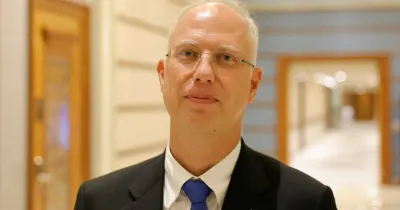
The U.S. delegation included representatives of the Office of International Nuclear Security (INS) at the U.S. Department of Energy’s National Nuclear Security Administration (DOE/NNSA), as well as the Pacific Northwest National Laboratory (PNNL). They included PNNL Laboratory Director Michael Carr, DOE/INS Deputy Country Manager Lilith Avoyan, and physical protection expert James Bonilla.
During the visit, delegation members held meetings with the management of Armenian Nuclear Power Plant CJSC. Discussions covered cooperation programs being implemented between the ANPP and the U.S. Department of Energy’s National Nuclear Security Administration, the results of work already completed, as well as prospects for further cooperation.
During the visit, the specialists reviewed upgrades implemented at the plant and discussed issues related to their practical application and effectiveness. Working meetings involving specialists from the relevant ANPP departments also addressed the status of ongoing work and future areas of cooperation.
The long-standing cooperation established between the ANPP and the U.S. Department of Energy has contributed to the continuous improvement of the nuclear plant’s physical protection systems and strengthened its level of security.
Earlier, Minister of Territorial Administration and Infrastructure Davit Khudatyan said Armenia’s new nuclear power plant should be modular, with proposals received from Russia, the U.S., France, and other countries.
Experts from Sargent & Lundy visited Armenia on May 19-22 under the U.S. State Department’s Foundational Infrastructure for Responsible Use of Small Modular Reactor Technology program to provide continued technical advice on small modular reactor technology. Four U.S. small modular reactor technologies considered the most suitable for deployment in Armenia were identified, while technical assistance was aligned with International Atomic Energy Agency best practices.