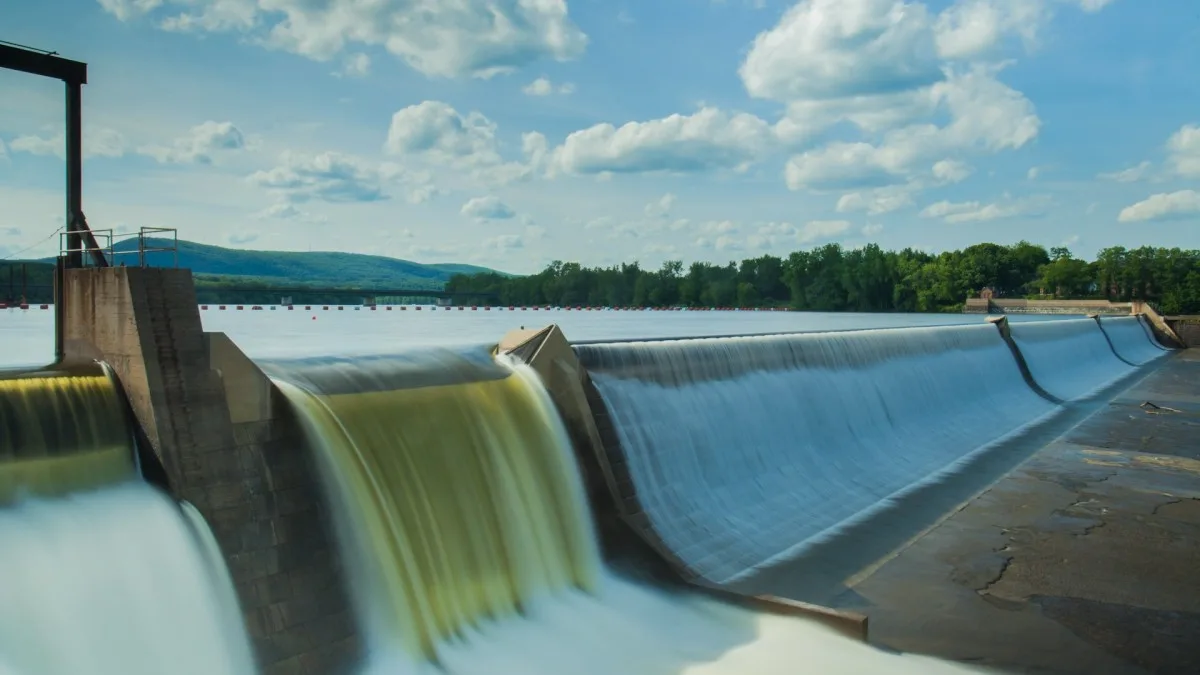

Existing dams across the United States could generate an additional 15.2 terawatt-hours of electricity a year, enough to supply power to more than 1.4 million homes, according to a new study by Oak Ridge National Laboratory and Idaho National Laboratory. The analysis focuses on retrofitting dams that do not currently produce hydropower rather than building new ones.
The estimate is based on HydroGenerate, a new software tool developed by researchers at Idaho National Laboratory. The platform combines water flow data from the U.S. Geological Survey and Oak Ridge to model potential output at individual dams using turbine performance curves and hydraulic head.
Researchers say the method offers a more precise picture of hydropower potential because it factors in seasonality, optimal turbine design and the operational realities of each structure. Carly Hansen, the project’s principal investigator and lead author of the report, said many dams already serve other critical purposes, and constraints such as flood control or navigation can sharply limit hydropower development.
Even after accounting for those limitations, the study points to a sizable pool of dormant emissions-free energy capacity across the country. Most of the dams identified as suitable for hydropower retrofits are located in the Great Lakes basin and along the upper Mississippi River, and 86 percent are federal facilities.
Bringing that extra capacity online could broaden the geography of hydropower in the United States by expanding the resource into regions that are currently underrepresented in the sector. In 2025, the leading U.S. hydropower-producing states were Washington, with 27 percent of U.S. total conventional hydroelectricity net summer generation capacity, followed by California at 13 percent, Oregon at 10 percent, New York at 6 percent and Alabama at 4 percent.
At present, only 3 percent of U.S. dams are equipped for power generation. That could change as the policy environment improves. Last month, the United States Department of Energy’s Hydropower and Hydrokinetic Office (H2O), which also supports the HydroGenerate project, awarded $5.5 million across 11 U.S. National Laboratory projects aimed at speeding up and simplifying hydropower licensing.
H2O Director Nichole Fitzgerald said hydropower has been a pillar of American energy for more than 100 years, providing reliable and affordable power nationwide. She said the selected projects are meant not only to support the continued operation of existing plants but also to reduce permitting and relicensing costs for operators so savings can be passed on to ratepayers.
The effort has drawn broad bipartisan backing in both the U.S. House of Representatives and the Senate. Matthew Allen, senior director of legislative affairs at the National Hydropower Association, said the current outdated licensing system is slowing new construction and putting around 16 GW of hydropower capacity at risk as it moves through relicensing over the next decade.



