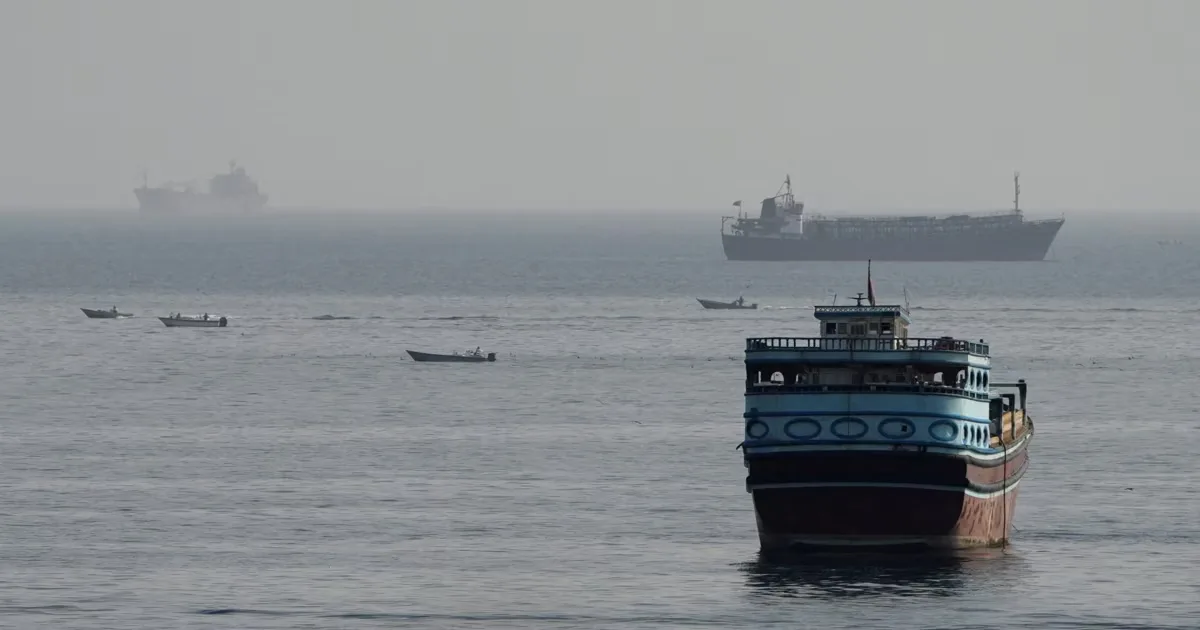
The United States has reduced the time windows during which commercial ships can pass through the Strait of Hormuz under US protection. According to Financial Times, vessels are now being asked to transit only at specific hours when US forces can provide air cover.

Since May, Washington has been providing air protection for ships traveling along the southern side of the strait near Oman’s coast. Previously, shipowners were given route coordinates and allowed to pass during a longer overnight period, when US military aircraft could remain overhead.
That regime changed in September. The transit window has now been narrowed to two specific time slots within each 24-hour period. Analysts say the shift should allow the US to use its resources more efficiently. Operating a modern US military aircraft can cost between $25,000 and $75,000 per flight hour.
Financial Times said that since the military conflict around Iran began on February 28, more than 70 commercial ships have come under attack in the Strait of Hormuz.
The change in transit rules comes as the US and Iran both seek to impose their own rules in Hormuz. Earlier this month, a representative of Iran’s Islamic Revolutionary Guard Corps announced that Tehran was creating a no-shipping zone east of the strait.
On September 9, Iranian military officials also said they had struck eight US tankers in the Strait of Hormuz area, describing the move as retaliation for US attacks on Iranian vessels.
Before the war, the Strait of Hormuz carried about 20% of the oil consumed worldwide, making any change in the area’s security regime significant for global energy markets.




