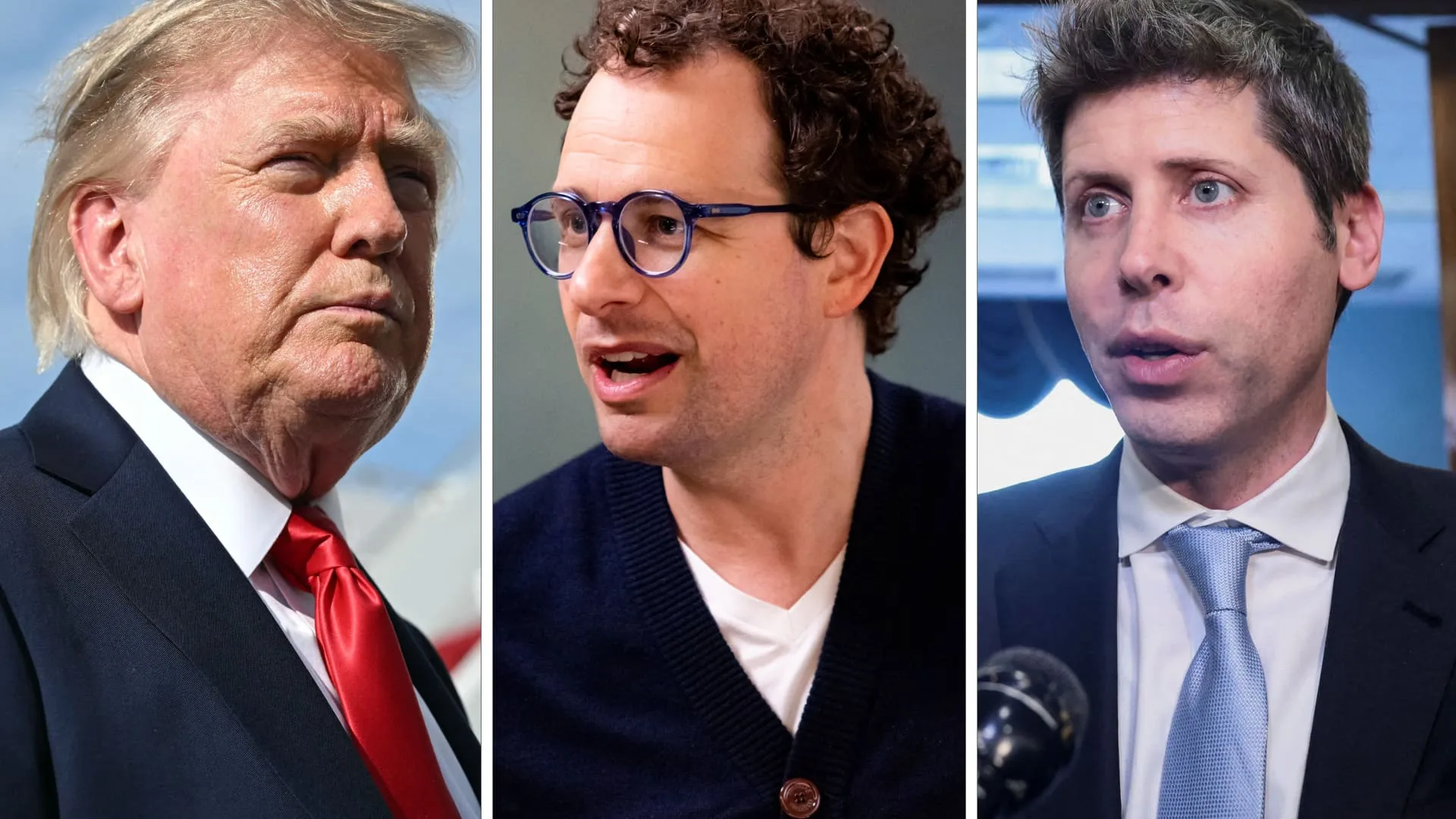
The debate over artificial intelligence safety and regulation is deepening, splitting both Washington policymakers and Silicon Valley leaders. At the center are two competing approaches: one side wants the most advanced model development slowed, while the other argues that no new laws or regulations are needed.
One camp includes U.S. President Donald Trump, Nvidia CEO Jensen Huang and former White House crypto czar David Sacks. The other brings together Anthropic's Dario Amodei, OpenAI's Sam Altman, Elon Musk and a broader group of AI researchers raising alarms about the technology's potential risks.
Safety concerns move to the forefront
The latest wave of debate intensified after Anthropic researcher Jacob Coxon said last week that he had quit his job because OpenAI and Anthropic were "gambling with our lives." As the discussion around his comments spread, an Anthropic alignment lead said AI has a greater than 10% chance of "killing all humans."
Over the weekend, Dario Amodei called for a slowdown in frontier AI model development. Sam Altman quickly aligned with him in a rare point of agreement between rival labs. Elon Musk also weighed in on X, writing that "Dario is right" and later saying he has been "sounding the alarm" on AI for a long time.
The issue quickly moved into Washington, sharpening tensions over how to curb growing AI risks without choking off technological innovation. Calls to slow AI development also brought together unlikely political allies, including Sen. Bernie Sanders, Rep. Chip Roy and former White House strategist Steve Bannon, who appeared at a nonprofit event in Washington on Tuesday in support of action on AI.
Trump dismisses apocalypse warnings
Donald Trump has forcefully pushed back against calls for new AI rules and against warnings of human extinction. In several Truth Social posts this week, he described fears of runaway AI as a "hoax" and a "scam," while also attacking public opposition to new data center construction.
On Monday, Trump called into Jensen Huang's interview at the All-In Summit in Los Angeles, taking that message directly to a tech audience. In a video posted to social media by an attendee, Trump said people opposing data center construction were "playing right into the hands of a lot of people that don't want to see it happen," adding that China could be among them. Huang responded: "You're right. We're not going to let that happen, sir."
U.S. Treasury Secretary Scott Bessent told the House Financial Services Committee on Tuesday that Trump is "completely aligned" with Huang. Later that day, Huang again backed Trump's position at Salesforce Dreamforce, saying, "We don't need any new laws. We don't need new regulations." He added that companies should simply be allowed to move as fast as they can.
Other administration figures adopted an even sharper tone. David Sacks, now co-chair of the President's Council of Advisors on Science and Technology, urged tech giants to keep pushing the frontier but to "stop pretending the motivation to slow down is purely altruistic." A similar argument came from Emil Michael, under secretary of War for Research and Engineering, who told Fox News that the current "fearmongering" is a coordinated campaign meant to scare the American public.
A central administration argument is that limiting regulation is essential if the U.S. wants to win the AI race against China. Trump said on Sunday that "whoever wins AI wins." House Speaker Mike Johnson said at a press conference on Tuesday that the president plans to bring AI leaders together at the White House "within the next week." He also dismissed doomsday scenarios, saying: "What the president is saying is you're not all going to be dead in 10 years. That's a hoax."





