Below are the main arguments from an article by former EU foreign policy chief and former NATO Secretary General Javier Solana and Ángel Saz-Carranza, director of the EsadeGeo Center for Global Economy and Geopolitics.
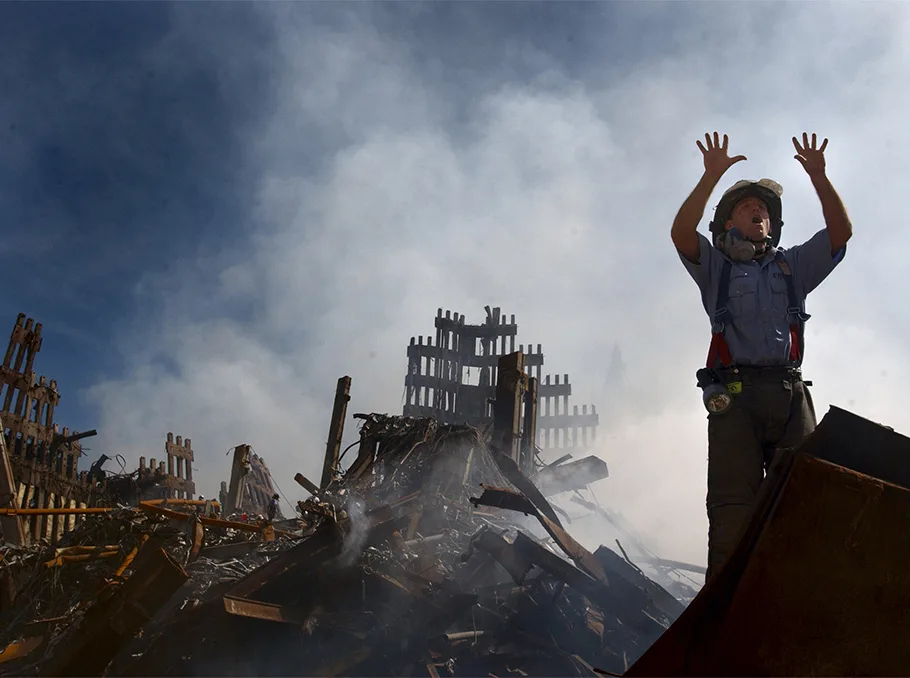
The authors argue that the September 11, 2001 attacks marked a decisive turning point that altered the trajectories of the United States, Russia and China. In their view, the processes set in motion after 9/11 eventually produced the fragmented geopolitical order seen today.
In the US case, that shift took the form of a sharp elevation of national security above other priorities. Washington, the article says, moved away from the multilateral leadership model that had underpinned its role since 1945. In that context, the US withdrew from the Anti-Ballistic Missile Treaty and began work on a missile shield, including the Ground-Based Midcourse Defense, or GMD, program in Alaska and California, along with plans for deployment in Poland. The authors say those moves alarmed a weakened Russia, and Vladimir Putin’s response was to pull out of the START II treaty.

The article also highlights the two major US wars in Afghanistan and Iraq. While the intervention in Afghanistan is described as legitimate and broadly supported internationally, the invasion of Iraq, carried out without UN authorization, is presented as a step that split even the European Union. France and Germany opposed it, while newer members such as Poland backed Washington’s actions.
According to the authors, both wars ended in failure. They also point to the 2008 NATO Bucharest summit, where Georgia and Ukraine were offered future membership in the alliance. But without a clear timetable or meaningful security guarantees, that pledge, they argue, alarmed the Kremlin without protecting either Georgia or Ukraine.

On Russia, the article says Putin’s rise to power in 2000 initially appeared to promise stability and economic development after the chaos of the 1990s. After 9/11, he was among the first leaders to call George W. Bush in a show of solidarity. That opening did not last. In 2003, the Kremlin seized YUKOS and jailed its owner, Mikhail Khodorkovsky. In 2006, former Russian intelligence officer Alexander Litvinenko was poisoned in London. In 2007, at the Munich Security Conference, Putin delivered a confrontational speech that effectively rejected the security architecture inherited from the Cold War era.
The combination of US unilateralism and Russia’s marginalization, the authors argue, pushed Moscow toward revisionist nationalism, more explicit authoritarianism and, gradually, closer alignment with a rising China. They note that Russia invaded Georgia in August 2008, creating a precedent for its later invasion of Ukraine.

China occupies a central place in the article as well. The authors recall that in December 2001, China joined the World Trade Organization with full backing from the US and the EU. Western governments expected trade integration to push China’s economic model closer to liberal capitalism. Instead, they argue, China developed its own tightly managed form of state capitalism and turned it into a tool of geopolitical influence.
After Xi Jinping came to power in 2012, the article says, authority was concentrated in his hands on a scale unseen since Mao Zedong. His political doctrine was written into the party charter in 2017, and a year later China’s legislature removed presidential term limits. Since then, the authors say, China’s civil and academic life has become increasingly separated from the rest of the world. They cite the 2017 blocking of WhatsApp and Skype as one example, saying it made communication harder for civil society groups and business leaders with Western counterparts. They also write that in the past five years, hundreds of senior officials and commanders have been removed or repressed.

In the authors’ conclusion, the world had a chance to take a different path after 9/11, but major powers instead became trapped in a narrow understanding of security and power. As a result, they write, the US turned inward and leaned on raw power, Russia became a revisionist state prepared for confrontation, and China transformed its economic system into a lever of influence that the West still has not effectively countered.
For Europe, these developments show that it can no longer rely entirely on American protection, the authors argue. In their view, Europe needs its own military capabilities as well as tools to shield its economy from Chinese pressure.



