

530A/Trump Accounts, created under the One Big Beautiful Bill Act, were designed to help families build long-term wealth by getting children to invest early. But a new study from national nonprofit Commonwealth suggests the households that could benefit the most are so far among the least likely to participate.
Commonwealth surveyed more than 1,000 eligible parents with low or moderate incomes after the program’s July 4 launch. According to the findings, only 5% of families in that eligible group have actually opened a 530A Trump Account.
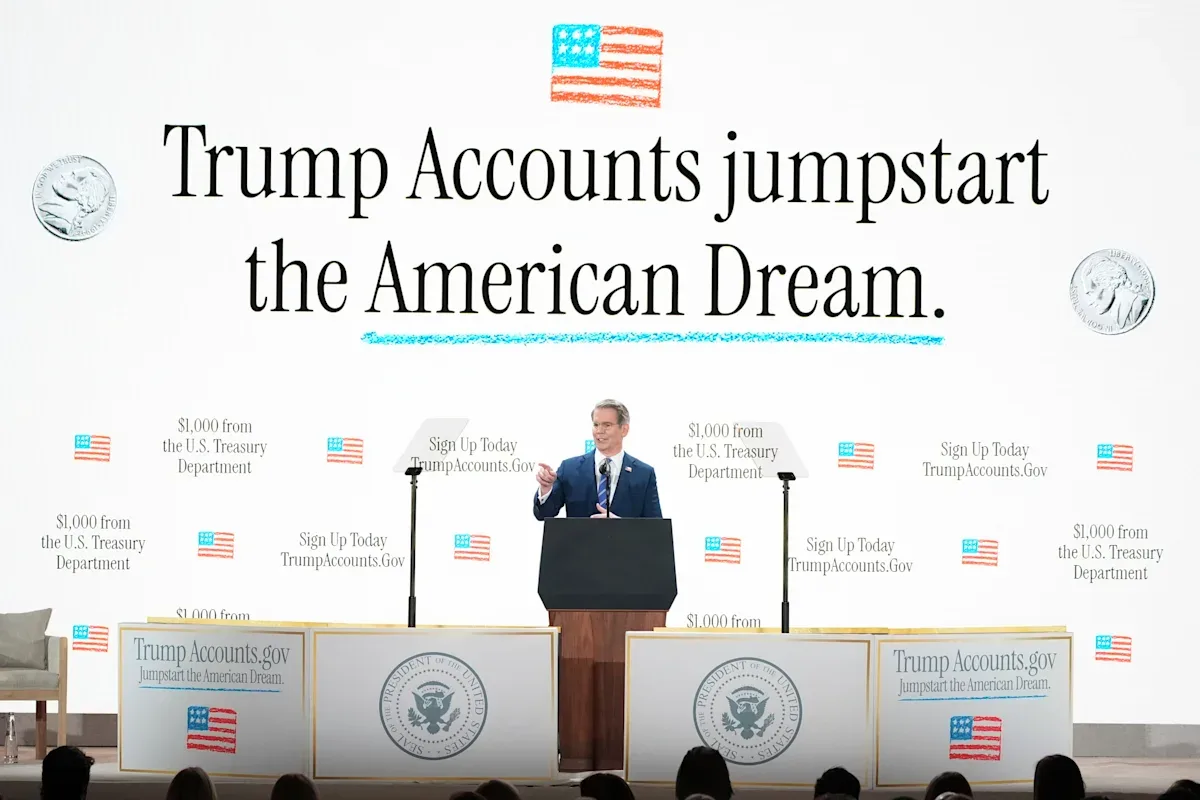
The Trump administration has said the accounts would give a generation of children a chance to benefit from the “miracle of compounded growth” and put them on a path toward prosperity from the start. Yet the survey indicates many parents still do not understand how the program works in practice, keeping them from enrolling. For some families, that also means leaving a $1,000 opening deposit unclaimed.
Why parents are holding back
The survey suggests lack of awareness is not the only issue. Among eligible parents, 55% said they had heard of the program, and that figure rose to 65% among parents who also qualify for the $1,000 federal contribution. Even so, 36% said they remain undecided about whether to sign up.
Timothy Flacke, CEO and co-founder of Commonwealth, told Yahoo Finance that many families still lack clear information about how 530A/Trump Accounts work logistically, how they fit alongside other investment accounts, and whether the program would endure through changes in administration. In his view, information gaps, misconceptions and unclear guidance are creating real barriers.
Financial concerns are also weighing on parents. Some 27% of eligible parents said they were worried about how the account could affect their tax obligations or eligibility for benefits. About a quarter, 25%, said they cannot afford to contribute additional money. Another 25% cited a lack of trust in the Trump administration as a barrier.
Flacke said the results point to a need for clearer, more neutral communication about the benefits of the accounts and their long-term wealth-building potential. He added that using both “530A” and “Trump” together could help make clear that these are the same accounts, grounded in the federal tax code and created through legislation passed and funded by Congress.
What families need to know about 530A/Trump Accounts
Some financial experts say Trump Accounts compare unfavorably with other tax-advantaged savings vehicles for children. In addition, because the program is new, details on extra contributions from nonprofits and on the menu of investment options are still evolving. Even so, better education for families across income groups remains key to helping eligible households make an informed choice.
Under the law, a Trump Account is a form of IRA and can grow through investment returns. Before a child turns 18, the funds may be invested only in a limited group of eligible products. Those include mutual funds or exchange traded funds that track either the Standard and Poor’s 500 (S&P 500) or another index that follows returns on equity investments in “primarily United States companies.” Annual fees on eligible investments cannot exceed 0.1%.
By default, account funds will initially be invested in the State Street SPDR Portfolio S&P 500 ETF (SPYM). Parents may later choose other eligible options, including iShares Core S&P 500 ETF (IVV), Vanguard Total Stock Market ETF (VTI), and State Street SPDR Portfolio S&P 1500 Composite Stock Market ETF (SPTM). Performance can be monitored through the Trump Account app or an online account.
The program also includes a one-time $1,000 government seed contribution for some children. It applies to children born between Jan. 1, 2025, and Dec. 31, 2028. That payment does not count toward the $5,000 annual contribution cap. Flacke said some accounts may also receive additional contributions from employers, philanthropists and corporations, and children may receive those funds even if parents do not add their own money, as long as an account is opened.
As for withdrawals, families generally cannot access the money before the child turns 18. At that point, the Trump Account functions like a traditional IRA, meaning standard restrictions apply. Account holders can keep contributing each year, but withdrawals made before age 59½ typically face a 10% penalty, except in cases specifically allowed by law.
Those penalty-free uses include higher education expenses, buying a first home ($10,000 limit), child birth or adoption ($5,000 limit), personal emergency expenses ($1,000 annual limit), qualifying medical expenses, and health insurance premiums during unemployment. In those cases, contributions are typically not taxed, though any earnings inside the IRA remain taxable.